
Can You Feel Pain in a Lucid Dream? Discover the Transformational Power of "Second Life: A Beginner's Guide to Lucid Dreaming"
Share
Table of Contents
- Introduction
- The Science Behind Lucid Dreaming and Pain
- Techniques for Mastering Lucid Dreaming
- Overcoming Common Challenges in Lucid Dreaming
- The Transformative Benefits of Lucid Dreaming
- Conclusion: Your Journey Awaits
- FAQ
Introduction
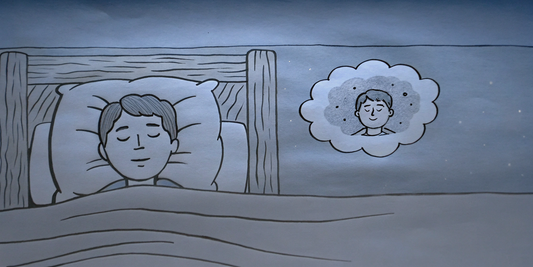
Have you ever experienced a dream so realistic that you felt every sensation as if it were happening in real life? Perhaps you felt the warmth of the sun on your skin or a rush of adrenaline as you leaped from heights. But what about pain? Can you feel pain in a lucid dream? This question has intrigued dreamers and researchers alike, revealing the vast and often uncharted territories of our subconscious minds.
Lucid dreaming presents an incredible opportunity for exploration, creativity, and even personal growth. It's more than just a fascinating phenomenon; it’s a vital life skill that allows us to tap into the depths of our consciousness and experience life in unprecedented ways. Yet, for many, mastering lucid dreaming can feel like an insurmountable challenge.
That’s where we come in. At Trevania, we’ve dedicated our journey to exploring consciousness and the art of dreaming, and we’ve distilled our findings into a powerful resource: "Second Life: A Beginner's Guide to Lucid Dreaming." This guide is not just another book; it’s your essential roadmap to mastering the art of lucid dreaming.
While the ideas surrounding lucid dreaming are captivating, their practical application often eludes those who attempt to navigate this landscape without structured guidance. Our guide is designed to bridge that gap, providing a clear, actionable pathway to unlocking your potential in the dream world.
The Science Behind Lucid Dreaming and Pain
Before we delve deeper into how our guide can empower you, it’s vital to understand the underlying mechanics of lucid dreaming and the phenomenon of pain within this extraordinary experience.
Studies indicate that lucid dreaming occurs during the REM (Rapid Eye Movement) stage of sleep, where brain activity is similar to wakefulness. Researchers have found that during this state, individuals can consciously control their dreams, leading to vivid experiences, including sensations like touch and, as some report, pain.
Pain in a lucid dream can arise when your awareness is specifically tuned into that sensation. For example, if you jump from a height, the impact may not be as painful as in waking life, but it can still be felt as an intense sensation, often different from actual pain. This phenomenon leads to a fascinating intersection of consciousness and sensory perception.
The implications of this knowledge are profound. Understanding how to navigate pain in dreams can transform your experience, allowing you to confront fears, rehearse scenarios, or simply explore the boundaries of your imagination without the constraints of reality.
But how do we effectively harness this knowledge? That’s where "Second Life: A Beginner's Guide to Lucid Dreaming" comes into play. Our guide is meticulously crafted to equip you with the techniques and insights needed to not only experience lucid dreaming but to master it.
Why "Second Life" is Your Ultimate Resource
- Comprehensive Framework: While the science of lucid dreaming offers intriguing insights, our guide translates this knowledge into practical steps. From reality checks to dream journaling, we provide a structured approach that makes the journey accessible.
- Empowerment Through Knowledge: Our guide emphasizes mindfulness and personal growth, aligning with our core values at Trevania. We empower you to take control of your dreams, giving you the tools to navigate sensations—pleasant or painful—with confidence.
- Accelerated Learning: Attempting to learn lucid dreaming through trial and error can be frustrating and slow. Our guide condenses years of research and practice into clear, actionable steps, allowing you to progress rapidly and effectively.
As we explore the depths of lucid dreaming, remember that while knowledge is powerful, applying it without guidance can lead to confusion and frustration. Our guide is the key to unlocking this vast potential.
Ready to take the plunge? Get your copy of "Second Life: A Beginner's Guide to Lucid Dreaming" today!
Techniques for Mastering Lucid Dreaming
Understanding the mechanics of lucid dreaming is just the beginning. The real magic lies in mastering specific techniques that enhance your ability to become aware and in control while dreaming.
1. Reality Checks
One of the foundational techniques in lucid dreaming is the practice of reality checks. This involves regularly questioning whether you are awake or dreaming throughout your day. Common methods include:
- Looking at Your Hands: In a dream, your hands may appear distorted or different from reality.
- Reading Text: Text in dreams often changes when you look away and then look back.
- Pinching Your Nose: In a lucid dream, you will still be able to breathe even if you pinch your nose shut.
These checks help to train your mind to recognize when you are dreaming. However, without a structured approach, many people struggle to integrate this habit effectively.
Our guide offers a comprehensive system for implementing reality checks consistently, ensuring they become second nature.
Don’t miss out on mastering reality checks—grab your guide now!
2. Dream Journaling
Keeping a dream journal is another essential technique for aspiring lucid dreamers. By recording your dreams immediately upon waking, you can identify patterns, recurring themes, and triggers that can help you recognize when you are dreaming.
However, many beginners find it challenging to maintain this practice or struggle to interpret their dreams effectively.
In "Second Life," we provide clear guidelines for effective dream journaling, including prompts and reflection exercises that enhance your understanding of your dream world. This practice not only boosts your recall but also increases your chances of achieving lucidity.
Start your journaling journey with our expert guidance—order your copy today!
3. Wake-Back-to-Bed Technique (WBTB)
The Wake-Back-to-Bed technique is a powerful method for inducing lucid dreams. This involves waking up after a few hours of sleep, staying awake for a short period, and then returning to sleep with the intention of becoming lucid.
This technique increases your chances of entering REM sleep directly, where lucid dreaming occurs. Yet, many find it challenging to implement this method effectively without guidance.
Our guide offers a step-by-step approach to WBTB, helping you optimize your sleep cycle and enhance your chances of experiencing lucidity.
Unlock the secrets of WBTB with "Second Life"—get your guide now!
4. Mnemonic Induction of Lucid Dreams (MILD)
The Mnemonic Induction of Lucid Dreams technique involves using affirmations or visualizations before sleep to set the intention of becoming aware in your dreams.
While this technique has proven effective, many beginners struggle to maintain focus or clarity in their affirmations.
In "Second Life," we provide tailored affirmations and visualization exercises that enhance the effectiveness of MILD, helping you to approach sleep with a clear intention and purpose.
Transform your dream intentions with our proven methods—purchase "Second Life" today!
5. Wild Technique (WILD)
The Wake Initiated Lucid Dreaming technique involves transitioning directly from wakefulness into a lucid dream. This method requires practice and awareness, as it can be challenging to maintain consciousness while your body falls asleep.
Without proper guidance, beginners often find themselves waking up entirely or losing awareness before entering the dream state.
Our guide provides detailed strategies for successfully executing WILD, ensuring that you can navigate this delicate transition with confidence and ease.
Master WILD with "Second Life"—secure your copy now!
Overcoming Common Challenges in Lucid Dreaming
As with any skill, the path to mastering lucid dreaming is not without its challenges. Here, we highlight some common obstacles and how "Second Life" can help you overcome them.
Challenge 1: Difficulty Achieving Lucidity
Many dreamers struggle to become aware within their dreams, often waking up before they can grasp the experience.
Our guide addresses this challenge by breaking down the techniques into manageable steps, providing clarity and structure that accelerates your progress toward lucidity.
Don’t let obstacles hold you back—start your journey with our guide today!
Challenge 2: Fear of Losing Control
The fear of losing control in a lucid dream can prevent some from fully engaging with the experience.
We offer practical strategies to build confidence and foster a sense of empowerment in your dream world. Our techniques encourage you to embrace the unknown and explore without fear, transforming your dreams into a playground of possibilities.
Empower yourself with our expert guidance—get "Second Life" now!
Challenge 3: Inconsistent Dream Recall
Inconsistent dream recall can be frustrating, leading many to feel disconnected from their dream life.
Our guide emphasizes the importance of dream journaling and provides techniques to enhance memory retention. By following our structured approach, you can significantly improve your dream recall and, in turn, your chances of achieving lucidity.
Enhance your dream recall with our proven methods—order your guide today!
The Transformative Benefits of Lucid Dreaming
Engaging in the practice of lucid dreaming opens the door to numerous benefits that extend beyond the dream world. Here, we explore just a few of the transformative experiences you can expect to gain through mastery.
1. Enhanced Creativity
Lucid dreaming provides a unique canvas for creative exploration. By harnessing the power of your imagination, you can brainstorm ideas, resolve creative blocks, or even rehearse performances in a risk-free environment.
"Second Life" equips you with techniques that encourage creative thinking and imaginative exploration, making it easier to tap into your creative potential while dreaming.
Unlock your creative potential—get your guide now!
2. Personal Growth and Self-Discovery
The dream world offers a mirror to our subconscious, presenting opportunities for self-reflection and personal growth. Lucid dreaming allows you to confront fears, rehearse scenarios, and gain insights into your waking life.
Our guide provides techniques that facilitate this process, empowering you to explore the depths of your consciousness with intention and clarity.
Embark on a journey of self-discovery—order "Second Life" today!
3. Improved Problem Solving
Have you ever woken up with a solution to a problem that eluded you the day before? Lucid dreaming can enhance problem-solving abilities, allowing for creative resolutions to challenges in your waking life.
Our guide offers structured approaches to utilizing your dream time for problem-solving, ensuring you can leverage this powerful tool effectively.
Transform your challenges into solutions—purchase your guide now!
4. Overcoming Nightmares
For those who experience frequent nightmares, lucid dreaming can serve as a therapeutic tool. By gaining control in your dreams, you can confront and overcome fears that manifest during sleep.
"Second Life" provides techniques specifically designed to help you navigate nightmares, transforming them into empowering experiences.
Take control of your nightmares—get "Second Life" today!
Conclusion: Your Journey Awaits
As we’ve explored, the world of lucid dreaming is filled with potential and promise. The ability to navigate your subconscious, confront fears, and unleash creativity is not just a dream—it's a reality that awaits those who are willing to embark on the journey.
However, the path to mastery can be filled with challenges and uncertainties, which is why "Second Life: A Beginner's Guide to Lucid Dreaming" is an invaluable resource. Our guide offers a comprehensive framework that empowers you to take control of your dream life and unlock your full potential.
Don’t let another night slip by without exploring the possibilities that await you. The transformation you seek is just a click away.
Join us on this incredible journey—order your copy of "Second Life: A Beginner's Guide to Lucid Dreaming" now!
FAQ
Q: Can I really feel pain in a lucid dream?
A: Yes, it is possible to feel pain in a lucid dream, but it often differs from real-life pain. Many lucid dreamers report that sensations are heightened or altered, allowing for unique experiences that can be controlled.
Q: Will "Second Life" help me achieve lucidity more easily?
A: Absolutely! Our guide provides proven techniques and structured methods designed to enhance your ability to achieve lucidity, making the process simpler and more effective.
Q: What if I struggle with dream recall?
A: "Second Life" includes essential techniques for improving dream recall, including journaling and reflection exercises. By following our guidance, you can significantly enhance your ability to remember your dreams.
Q: How long will it take to become proficient in lucid dreaming?
A: The timeline varies for each individual, but with consistent practice using the techniques outlined in our guide, many people experience significant progress within weeks.
Q: Is lucid dreaming safe?
A: Yes, lucid dreaming is considered a safe practice. Our guide emphasizes mindfulness and control, allowing you to explore your subconscious without fear or harm.
Embark on your journey today—get your copy of "Second Life: A Beginner's Guide to Lucid Dreaming" now!